Electricity Market
The Moroccan electricity market lies at the heart of the Kingdom’s energy transition. Structured around major public actors but gradually opening to the private sector, it plays a decisive role in supporting economic growth, strengthening energy security, and accelerating the integration of renewable energies. With a target of 52% renewable energy in its electricity mix (installed capacity) by 2030, Morocco is adopting new legislative frameworks, scaling up investments to modernise its infrastructure, and building a more sustainable, competitive, and resilient electricity system.
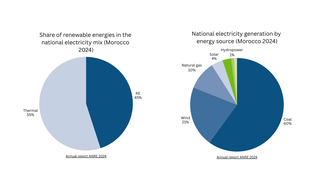
To meet rising electricity demand and reduce its dependence on hydrocarbon imports, Morocco embarked early on a profound transformation of its electricity system, based on the diversification of supply sources, the valorisation of its renewable energy potential, and the promotion of energy efficiency across all sectors. Although Morocco’s energy mix in 2024 remains dominated by fossil fuels, the share of renewable energies has continued to grow, accounting for 27% of national electricity production, mainly from wind, solar, and hydropower.
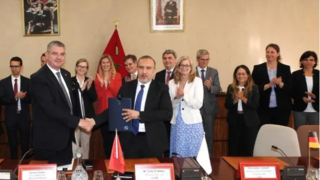
To learn more: Energy Facts | Energy Partnership Morocco-Germany
Key stakeholders in the Moroccan electricity market
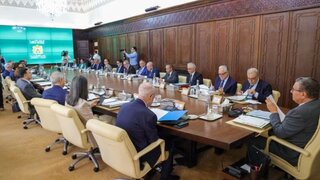
The Moroccan electricity system is based on a hybrid organisation, combining a highly regulated market with a gradual opening to competition. It relies on several institutional actors responsible for strategic planning, regulation, generation, transmission, distribution, and the integration of renewable energies.
Milestones
Law 13-09 on renewable energies
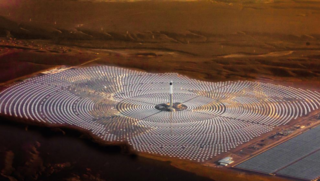
2010 - Adopted to accelerate the integration of renewable energies in Morocco, Law 13-09 opened the renewable energy sector to competition by allowing private actors to generate electricity from solar, wind, and hydropower sources and sell it to large consumers or through national networks. It regulates access to transmission and distribution networks, defines authorisation and declaration procedures, and enhances the attractiveness of investment in clean energy.
Law 48-15 – Creation of the National Electricity Regulatory Authority (ANRE)
2015 - Through Law No. 48-15, Morocco established an independent regulator responsible for ensuring electricity market transparency, supervising non-discriminatory access to networks, and setting network usage tariffs. This reform deepened sector liberalisation by introducing modern regulatory mechanisms and strengthening investor confidence. ANRE officially became operational in 2018.
Law 58-15 – Modification of the renewable energy framework
2016 - Law No. 58-15 amends and supplements Law 13-09 by expanding opportunities for direct sales of renewable electricity to end consumers. It raises the minimum threshold for hydropower projects from 12 MW to 30 MW, allows renewable installations to connect to low-voltage networks, and introduces the sale of surplus electricity produced (up to 20% per year) to ONEE’s high- and extra-high-voltage installations.
Law 82-21 – Reform of self-generation
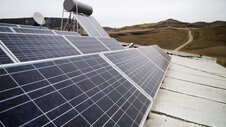
2023 – With the adoption of Law No. 82-21, Morocco established a comprehensive legal framework for electricity self-generation. This reform encourages the emergence of consumers, households, industries, and local authorities, capable of producing their own energy and valorising surplus generation under regulated conditions. It marks a key step toward a more decentralised and flexible energy system.
Law 40-19 – Strengthening the renewable energy framework
2023 - La loi n°40-19 modernise davantage le dispositif de production privée en introduisant la notion de capacité d’accueil du réseau et en clarifiant les règles d’accès et de raccordement. Cette évolution vise à optimiser l’intégration des projets renouvelables et à mieux planifier l’utilisation des infrastructures électriques nationales.
ANRE Decision No. 02/25 setting the Distribution Network Usage Tariff (TURD)
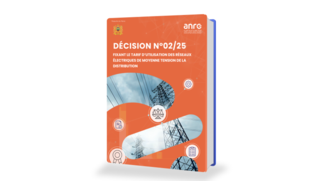
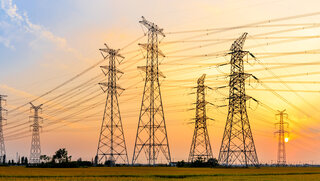
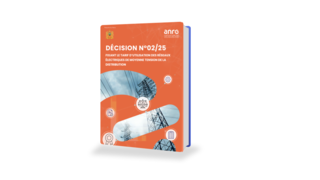
2025 - Through Decision No. 02/25, ANRE establishes for the first time the distribution network access tariff applicable to operators injecting or withdrawing electricity at high and medium voltage levels. This measure represents a key step in the gradual liberalisation of the market by creating transparent, stable, and non-discriminatory tariff rules.
Green electricity generation in Morocco
Sustainable electricity generation in Morocco is based on a hybrid model combining public power plants operated by ONEE, independent power producers (IPPs), and large-scale renewable projects led by MASEN or private operators. This model enables the country to diversify its energy sources while meeting steadily growing demand.
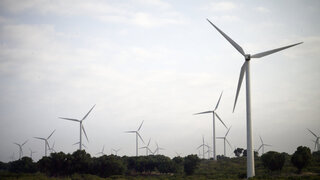
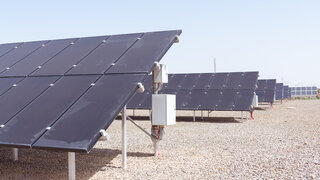
By the end of 2024, installed capacity in Morocco reached 12,016 MW, driven by the expansion of solar and wind infrastructure, bringing the share of renewables to 45.3% of total installed capacity. Since the launch of the 2009 energy strategy, the country has nearly doubled its installed capacity. Nevertheless, electricity generation remains largely dominated by coal, which still accounts for 60% of total production in 2024.
Morocco is thus pursuing a gradual transition toward more sustainable generation, aiming to increase the share of renewable energies to 52% of installed capacity by 2030 and officially announcing its intention to phase out coal by 2040 in its NDC 3.0.
Integration and transmission of green electricity
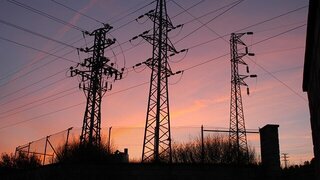
Grid integration and electricity transmission are major challenges to ensuring reliability, security, and coherent integration of new renewable capacities. Historically, the national transmission network has been managed by ONEE, which acts as the system operator, ensuring grid access for independent producers and real-time balance between generation and consumption.
Moreover, regional integration of electricity networks through interconnections has been a core pillar of Morocco’s energy strategy since 2009. Morocco is currently the only African country directly connected to Europe through two 700 MW high-voltage cables linking its grid to Spain since 1997. In addition to these two existing interconnections with Spain, a third one is under development to increase exchange capacity. Morocco is also assessing an interconnection project with Portugal, which would further strengthen its integration into the Iberian electricity system and improve access to European renewable energy markets.
At the African level, a new interconnection with Mauritania is under study to promote regional energy cooperation. These links enable international electricity exchanges, enhance security of supply, and support the future emergence of an integrated regional electricity market.
Trade and sale of green electricity
The commercialisation of renewable electricity in Morocco is diversifying and gradually opening to new actors, while remaining regulated by the State and ANRE. It covers both the domestic market and, for certain productions, exports. ONEE and the SRMs are responsible for electricity commercialisation.
In addition, independent producers may sell electricity to ONEE through long-term contracts, directly supply eligible industrial consumers under regulated agreements, or generate their own electricity and inject surplus into the grid. These surpluses may be purchased by the grid operator or ONEE, up to a limit of 20% of annual production. Public and private distributors supply end customers, while network operators ensure access and apply regulated tariffs.